
Home / Blog / Year-End Mileage and Expense Wrap-Up for Freelancers (Paper First)
Year-End Mileage and Expense Wrap-Up for Freelancers (Paper First)
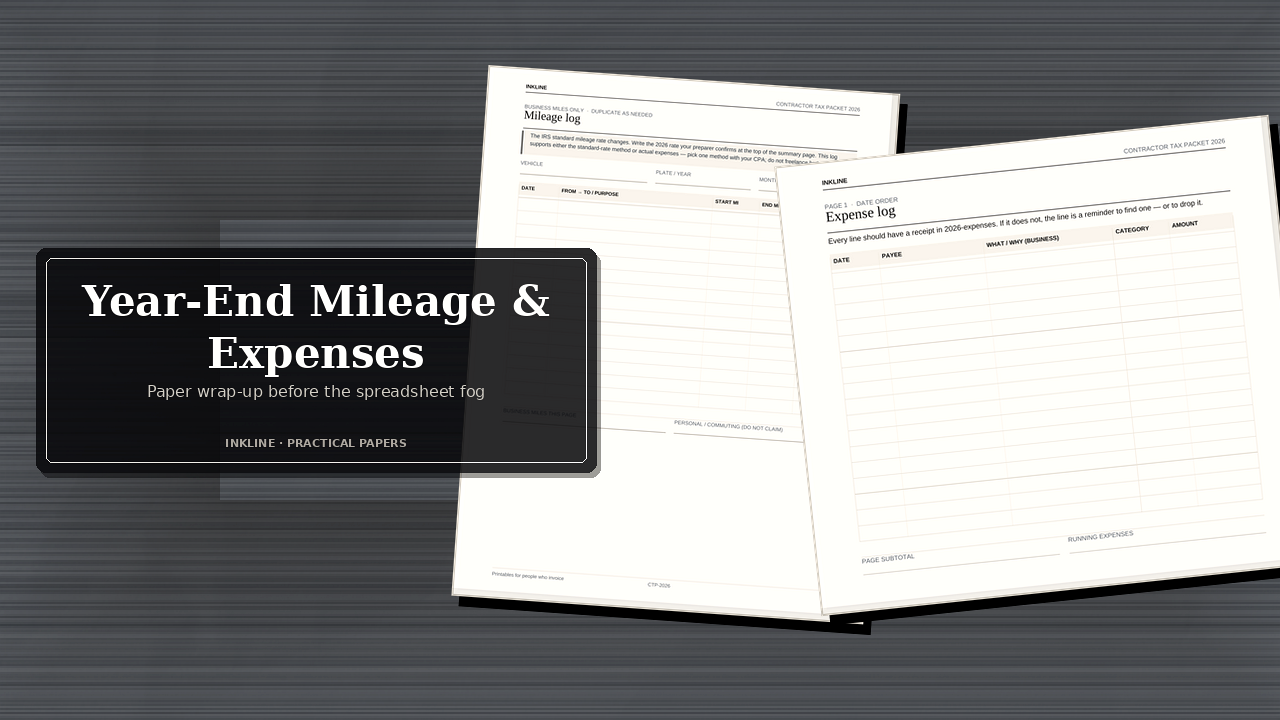
December arrives, and the shoebox—literal or digital—starts to mutter. Mileage half-logged. Receipts in email, camera roll, and a glove compartment. Category names that made sense in March and nowhere else.
You do not need a new personality for year-end bookkeeping. You need a short wrap-up ritual and pages that hold still while you fill them.
This is not tax advice. Rules change, and your situation is specific. Use this as an organizational checklist; confirm treatment of mileage, deductions, and records with a qualified tax professional or the IRS materials that apply to you.
Why wrap up before January noise
Filing season and January estimated-tax deadlines compete for attention. Closing the prior year’s mileage and expenses in late November or December gives you cleaner numbers when you need them—and fewer “where did that receipt go?” evenings in February.
Paper helps because year-end work is reconciliation, not innovation. You are matching trips to dates, receipts to categories, and bank lines to notes. A printed log is hard to accidentally filter into oblivion.
Mileage: finish the log you already started
If you tracked miles all year, your job is completion and totals—not reinventing the method.
Quick mileage close checklist
- Gather sources — paper log, app export, calendar appointments that implied travel.
- Fill gaps while memory is fresher than it will be in March. Note business purpose for each trip (client, bank, supply run, coworking, etc.).
- Separate personal miles clearly so you are not estimating under pressure later.
- Total by month, then year. Write the grand total in ink on a summary page.
- Store the log with that tax year’s packet—not in a random drawer.
If you barely tracked: start an honest reconstruction from calendar and maps now, then commit to a one-line-per-trip log for the new year. Coming printables like a dedicated year-end close checklist can help; until then, a single summary sheet plus monthly pages are enough.
Expenses: categories that survive contact with reality
Pick a short list of categories you actually use. Common freelancer buckets include:
- Software and subscriptions
- Supplies and postage
- Professional services (legal, bookkeeping, contractors you paid)
- Education and books
- Marketing and website
- Home office (only as your professional guidance allows)
- Travel and meals (with notes on business purpose)
- Equipment
For each category, list vendor, date, amount, and a three-word purpose. Attach or reference the receipt. If a receipt is missing, note that on the line—do not invent a number.
A paper-friendly expense session (60–90 minutes)
- Print or open your bank/credit CSV; do not scroll endlessly on a phone.
- Work one month at a time on a letter-size sheet.
- Mark personal charges with a clear symbol so they never sneak into business totals.
- Circle anything unclear for your preparer—better a question mark than a guess.
The year-end folder
Create one physical (or scanned-and-labeled) folder for the tax year:
- Mileage summary + detailed log
- Expense sheets by month or category
- 1099s and income summaries as they arrive
- Notes on large unusual purchases
- Questions for your tax pro
Label the spine with the year. Next December you will thank past-you.
Tie-in to estimates without the panic
Once expenses and mileage are summarized, estimated-tax math gets less emotional—you are working from pages, not vibes. If you use a simple calculator for quarterly estimates, fine; the organizer still comes first. (After mid-September deadline season, treat any estimate tool as a helper, not the headline.)
A printable packet for contractor paperwork season
If you want letter-size pages already structured for mileage, expenses, and contractor tax-season organization—without turning your desk into a spreadsheet shrine—Inkline’s Contractor Tax Packet 2026 is built for people who invoice. Print the sheets you need; leave the rest for filing season.
For a fuller freelancing paper stack (proposals through desk rhythm), see The Desk Set or browse Inkline.
Soft close
Year-end wrap-up is desk work: quiet light, a pen, one year at a time. Finish the mileage. Sort the expenses. File the folder. Then put the packet where January can find it.
Again: not tax advice—organization only. When in doubt, ask a professional.