Home / Blog / January 15 Estimates and 1099 Season: A Freelancer’s Paper Checklist
January 15 Estimates and 1099 Season: A Freelancer’s Paper Checklist
Early January stacks two kinds of paper on the freelancer desk: estimated-tax reminders and the first wave of contractor paperwork. Neither requires drama. Both reward a checklist you can see without opening five tabs.
This is not tax advice. Deadlines, forms, and who owes what depend on your facts. Confirm dates and requirements with a qualified tax professional or official IRS sources. What follows is an organizational guide—how to line up documents and notes so conversations with a preparer (or your own filing software) go smoother.
Two seasons that overlap
Q4 estimated tax (often due around January 15 for many individual filers) is about payment timing for income you already earned. Your job on the desk is to gather income and deduction summaries so the payment amount is grounded—not guessed in a panic the night before.
1099-NEC / contractor paperwork season (typically January–February) is about issuing forms if you paid qualifying contractors, and receiving forms from clients who paid you. Paper trails matter on both sides.
Treat them as neighboring folders, not one blob labeled “taxes later.”
Before January 15: an estimate prep stack
Print or write a one-page cover sheet:
- Year and quarter (Q4)
- Income total (or range if still reconciling)
- Major expense totals you trust so far
- Prior payments already made for the year
- Questions for your tax pro
- Due date you are working toward
Behind that sheet, clip:
- Bank and processor summaries for the quarter
- Invoice list: sent, paid, outstanding
- Mileage and expense wrap-up from year-end (if you finished it)
- Notes on large one-off income or costs
If you like a simple calculator for quarterly estimate math, use one as a helper after the numbers exist on paper. Post–September deadline season, keep estimate tools in a supporting role—not as the product story.
1099-NEC season: organizer mindset
Whether you send forms, receive them, or both, the desk problem is the same: identity details and dollar totals in one place.
If you paid contractors
Build a simple roster page:
- Legal name / business name
- Taxpayer ID on file (W-9 collected earlier—if you are still missing one, chase it now)
- Address
- Amount paid in the calendar year
- Payment method notes
- Form status: needed / drafted / sent / filed as required
A dedicated W-9 tracker printable is a natural “coming” desk companion; until you have one, a table on letter-size paper works. Do not wait until the week forms are due to discover a missing W-9.
If you receive 1099s
Log each form as it arrives:
- Payer name
- Amount
- Date received
- Whether it matches your invoice total (note mismatches for follow-up)
Mismatches are common enough to deserve a blank line—not a spiral. Fix with the payer early when you can.
A two-week January rhythm
Week of New Year
Close prior-year expense and mileage summaries if unfinished. Start the Q4 estimate cover sheet. Send polite W-9 reminders if you issue forms.
Days before the estimate due date
Finalize numbers with your pro or software. Schedule the payment. File the confirmation printout or PDF in the year’s tax folder.
Through late January / February
Track outbound and inbound 1099 activity on the roster. Keep the folder labeled and closed when you are not working in it—visual clutter raises cortisol for no benefit.
What not to do
- Invent income or deduction figures to “just get a number”
- Mix personal and business totals on the same unsigned scrap
- Rely on memory for contractor addresses
- Treat a blog checklist as a substitute for professional guidance
Stationery is for clarity. Compliance is for professionals and official rules.
Printables that keep the season on the desk
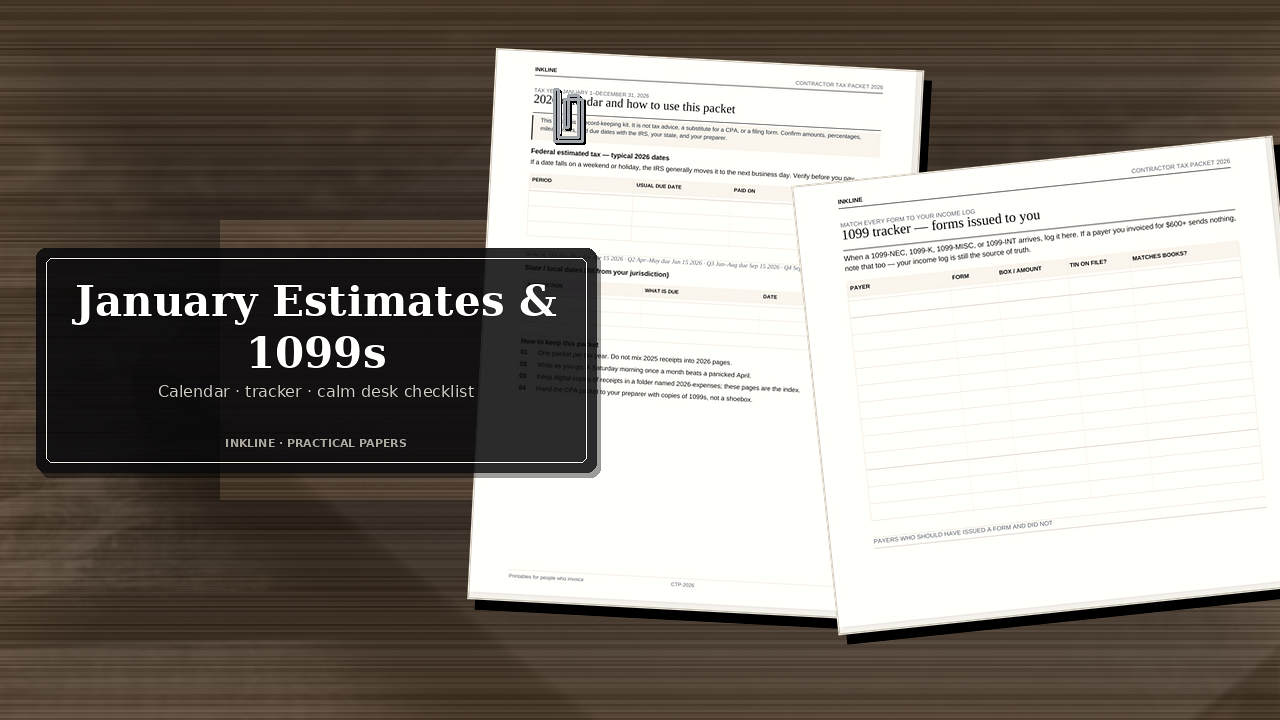
Inkline’s Contractor Tax Packet 2026 is a letter-size organizer aimed at freelancers and contractors who want mileage, expense, and paperwork pages they can print and fill—useful from year-end wrap-up through filing season, including the January estimate window.
If you are also rebuilding how clients and proposals live on paper, the Client Binder Kit and shop home at Inkline sit in the same quiet lane: ink, letter size, no mysticism required.
For estimate math only, a free helper lives at Sept Fifteen—useful when you already have figures; not a substitute for advice.
Soft close
January asks for payment timing and paperwork honesty. Put a cover sheet on the desk. Fill the roster. Ask a professional what you cannot answer from the pages. Then return to invoicing with the folder filed, not hovering.
Not tax advice—organization and desk habits only.