Home / Blog / The Freelancer Desk System: Letter-Size Printables That Stay in Reach
The Freelancer Desk System: Letter-Size Printables That Stay in Reach
Most freelancers do not fail for lack of apps. They fail for lack of a place where the current client, the open proposal, and the this-year tax notes can sit without arguing with each other.
A desk system is not a productivity religion. It is a small set of letter-size pages, a few folders, and habits light enough to keep when work gets loud. Ink on paper. Muted slate tabs. White space you can actually write in.
What “system” means here
Three layers:
- Active work — who you are serving this month
- Pipeline — proposals and rates in motion
- Compliance & memory — mileage, expenses, forms, past decisions
If those layers share one chaotic pile, everything feels urgent. If each has a home, you can ignore two of them while you invoice the third.
The physical setup (keep it boring)
- One standing tray or shallow inbox for today’s pages only
- Client binder or tabbed folder for active engagements
- Pitch folder for proposals and rate cards (dated)
- Tax-year folder for the current calendar year
- Archive box for closed clients and prior years
Letter size wins because it matches what you already print for contracts and PDFs. Fancy sizes look lovely and get left in the drawer.
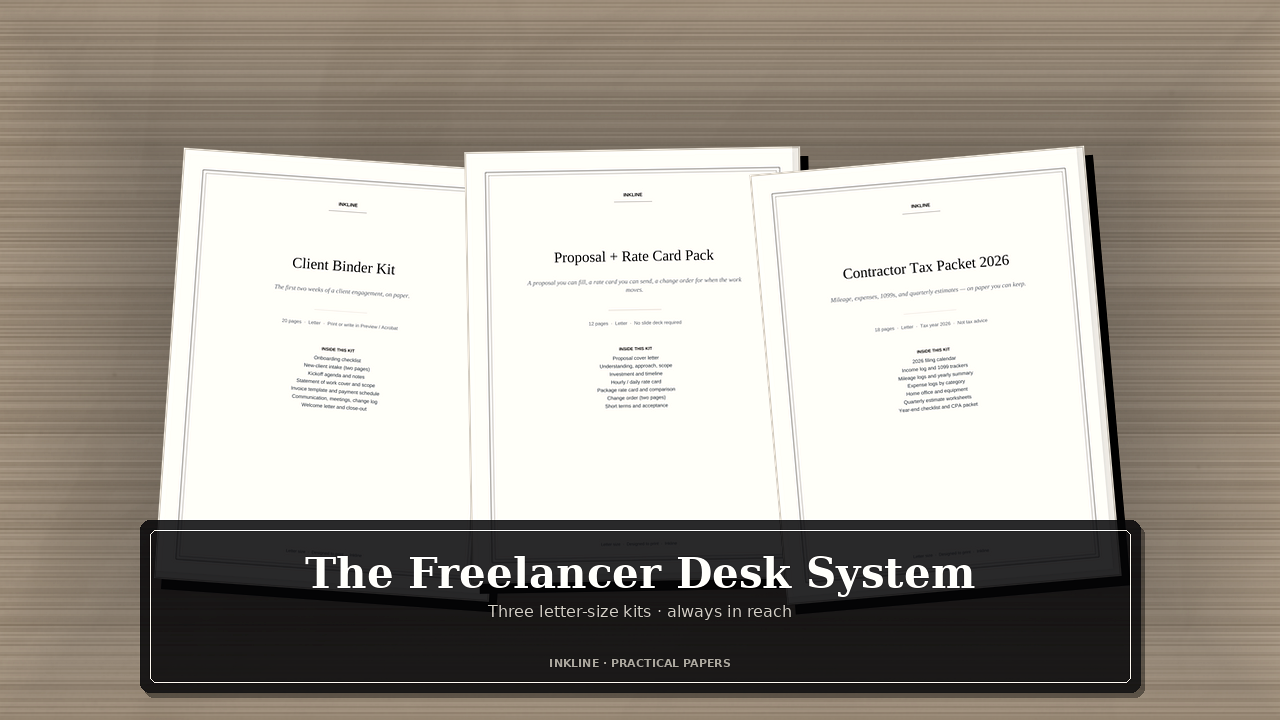
Page types that earn their keep
Client onboarding pages
Snapshot, scope, kickoff agenda, meeting log, payment notes. Fill at the start; revisit when something changes. This is how “I thought we agreed” becomes “here is the dated note.”
Proposal and rate-card pages
Same layout every time. Swap content, not structure. A printed rate card in the pitch folder means you are never inventing numbers on a call.
Tax-season organizers
Mileage log, expense sheets, estimate cover page, contractor roster when you need it. These are seasonal—but they should already exist in the PDF library so December does not become a design project.
Optional coming companions
A year-end close checklist, W-9 tracker, or invoice log can slot into the same tray when you add them. Treat them as topical hooks and future pages—not as promises that every idea is already a live SKU on the shop.
A weekly desk ritual (20 minutes)
- Clear the inbox tray to zero—file or discard.
- Glance at active client tabs: any blank follow-up lines?
- Check the pitch folder: stale proposals older than your comfort window get a date and a decision (follow up / archive).
- Drop receipts or mileage lines onto this month’s sheets.
- Put the pen down. The ritual ends on purpose.
Consistency beats intensity. A frantic Sunday overhaul twice a year is not a system.
How the pieces connect through the year
- New client → onboarding pages → binder tab
- New pitch → proposal + rate card → pitch folder → win or archive
- Ongoing → meeting log + invoice notes
- Late year → expense and mileage wrap-up → tax-year folder
- January → estimate cover sheet + 1099 roster → same folder
You are not building a second business called “administration.” You are giving administration a tray.
Choosing a ready-made stack vs. DIY
DIY works if you enjoy layout and already know which pages you use. Many freelancers stall on fonts and margins and never print page one.
If you prefer a complete letter-size freelancing paper system already designed to sit together—onboarding through desk rhythm—Inkline’s The Desk Set is the full stack for people who invoice. It is stationery: print what you need, leave the PDF on your drive, no subscription theater.
Prefer to start thinner? Individual kits live on the same shop:
All of them, and the Desk Set, are at Inkline.
Voice of the desk
Paper-white. Ink. Muted slate. The aesthetic is a reminder: this is calm infrastructure, not a hustle feed. No mysticism. No scoreboard screenshots. Just pages that hold still while you decide what to write.
Soft close
A freelancer desk system is successful when you can find last Tuesday’s decision in under a minute. Build the trays. Print the pages. File the year. Then do the work those pages were meant to protect.