Home / Blog / A Calm Client Onboarding Checklist for Freelancers Who Prefer Paper
A Calm Client Onboarding Checklist for Freelancers Who Prefer Paper
New clients are exciting. New-client chaos is not.
If you invoice for a living, the first two weeks with a project often decide whether the work feels clear or foggy. Scope drifts. Contacts multiply. Kickoff notes live in three inboxes and one forgotten notebook. A simple paper onboarding system will not replace your contracts or your calendar—but it will give every client a home on your desk.
This is a practical, letter-size approach: print once, fill by hand, file by client. Stationery, not software.
Why onboarding belongs on paper (at least once)
Digital tools are fine for delivery. Onboarding is different. You are collecting decisions: who signs, what “done” means, how invoices go out, where files live. Writing those answers in ink slows the conversation just enough to catch gaps before the first invoice.
A binder also travels. Discovery calls, coffee meetings, and desk days all work the same way when the pages are in front of you.
What to put in a client onboarding binder
Keep the stack thin. One tab per client is enough for most freelancers. Aim for pages you will actually fill—not a corporate HR packet.
1. Client snapshot (one page)
Name, company, primary contact, billing contact (if different), preferred channel, time zone, and how they want to be invoiced. Leave a line for “how we met” and “why they hired you.” Those two lines save you when you reopen the file six months later.
2. Scope and deliverables
Plain language. What is in. What is out. Revision rounds. Timeline anchors (kickoff, draft, final). If the paid proposal already covers this, copy the essentials onto one sheet so you are not flipping between PDFs during a call.
3. Kickoff agenda
A short checklist: introductions, goals, success criteria, assets needed from them, your first milestone, next meeting. Check boxes beat improvisation when nerves are high.
4. Contacts and access
Who has login access, who approves copy, who pays. Note passwords only if your security habits allow it—many freelancers keep access notes separate and just list where credentials live.
5. Meeting log (a few lined pages)
Date, attendees, decisions, open questions. You do not need a full CRM for this. You need a record you can point to when someone says, “I thought we agreed…”
6. Invoice and payment notes
Net terms, late-fee policy (if any), preferred payment method, PO numbers. When billing questions arise mid-project, you want one place to look.
A simple onboarding sequence you can reuse
Use the same rhythm for every new client so nothing depends on memory.
- Before the kickoff — Print the snapshot and scope pages. Fill what you already know from the proposal. Highlight blanks for the call.
- On the call — Walk the kickoff agenda. Write decisions in ink. Confirm who receives invoices.
- Same day — File the pages behind a labeled tab. Send a short email summarizing what you wrote (digital confirmation, paper source of truth).
- First invoice — Cross-check the payment notes page before you send. Small mismatch here creates awkward follow-ups later.
- Close or renew — Add a final meeting note: what shipped, what they loved, whether you will work together again.
Common gaps this system catches early
- Two “primary” contacts who disagree on scope
- A project start date with no asset deadline on their side
- Invoice email that bounces because billing lives with someone else
- “Quick favor” work that was never on the deliverables page
None of these require a new app. They require a blank line you bother to fill.
If you want the pages already designed
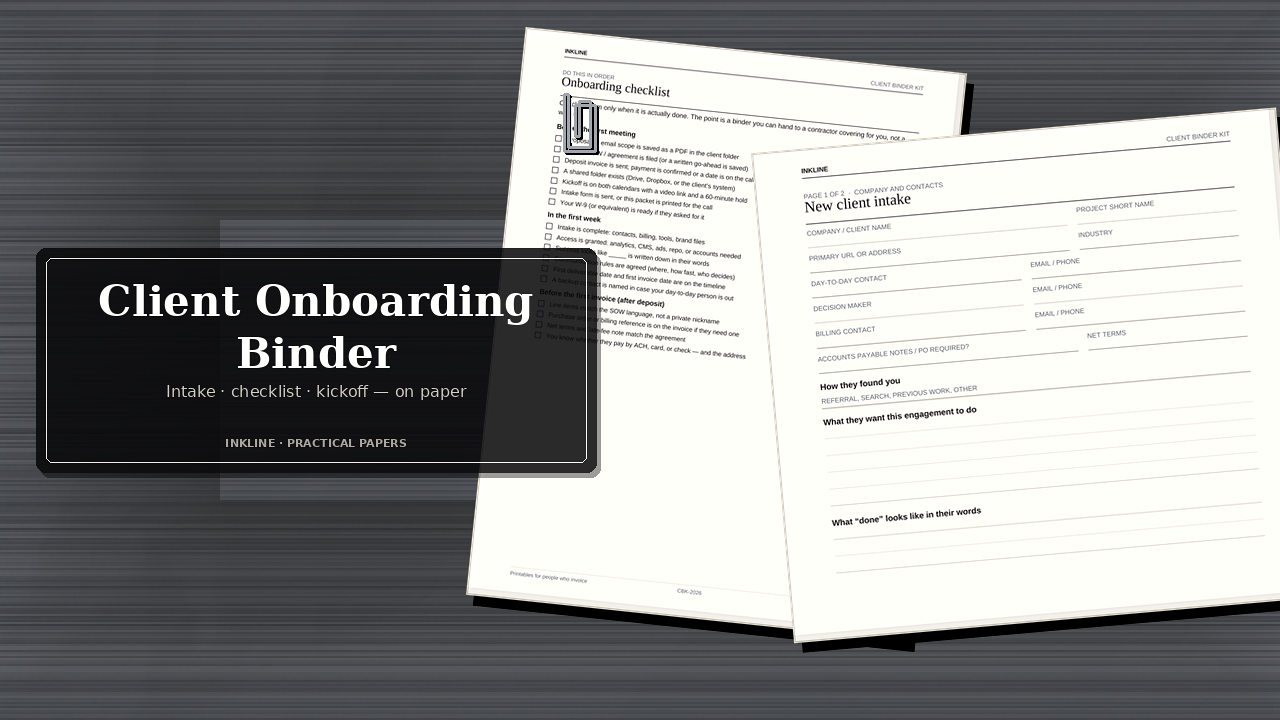
Building templates from scratch is fine—and slow. If you would rather start with letter-size pages already laid out for intake, scope, kickoff, and client filing, Inkline’s Client Binder Kit is a printable set made for people who invoice. Print what you need, leave the rest in the PDF.
When you are ready to expand beyond onboarding into proposals, tax-season organizers, and a full desk stack, the shop home is Inkline.
Keep the binder honest
A binder only works if it stays light. Archive finished clients. Do not let every sticky note migrate inside. Revisit your blank templates once a year and retire pages you never use.
Onboarding is not a personality test. It is a desk habit: paper, ink, clear next steps. That is enough.